
info@icesind.com
+852 2338 8500
info@icesind.com
+852 2338 8500
A heat exchanger is a technical apparatus in which heat is exchanged between two mediums having different temperatures.
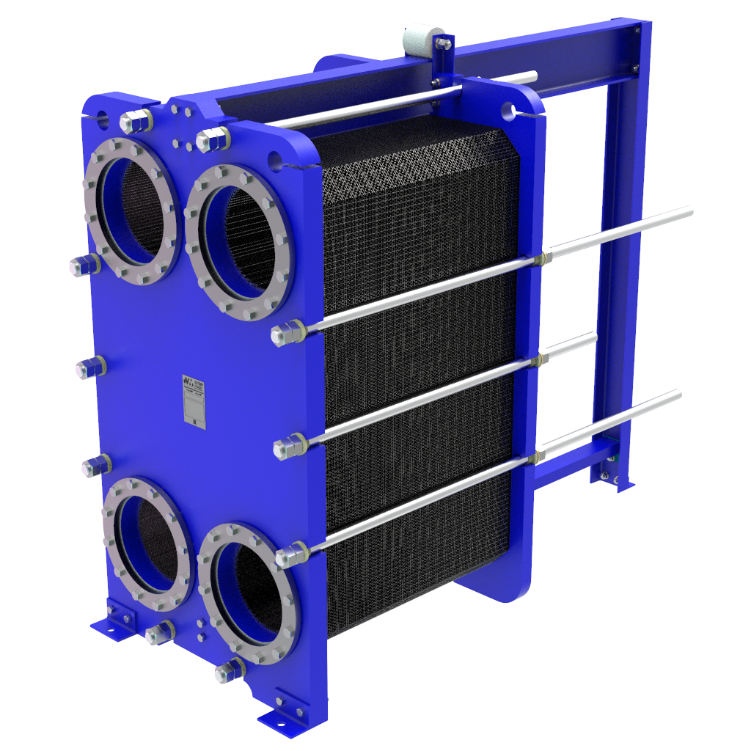
Shell and tube heat exchangers benefit from a wide operating temperature range, resistance to pressure hammer, high efficiency, wear resistance, durability, maintainability, operational safety and the ability to operate in aggressive environments.
General-purpose air cooling units (ACU) are heat exchange equipment and are designed for:
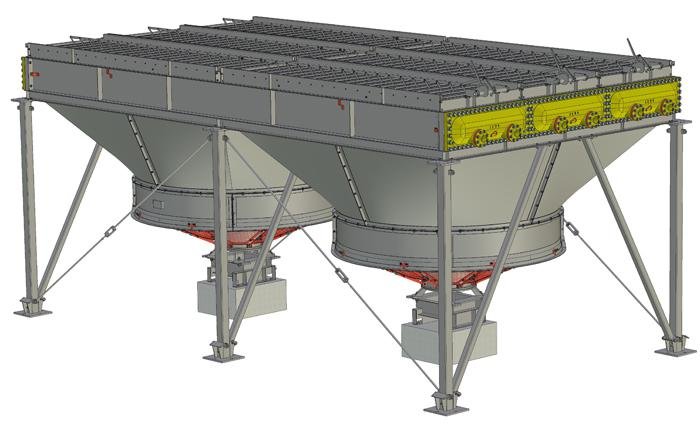
The unit can consist of 3 horizontally arranged tube sections made up of finned bimetallic tubes. The sections are mounted on a metal structure. The fan wheel drive is placed on a separate frame. The fan wheel, rotating in the collector cavity, drives air through the inter-tube space of the sections, cooling the product. The cooled process product moves inside the bimetallic finned tubes, transferring the heat through their walls to the cooling agent. The cooling medium is atmospheric air. The units can be equipped with a humidifier, heater and louvers. Louvers are available with manual adjustment or automatic rotation of the shutters. The units can be equipped with recirculation system consisting of panels, upstream, downstream and side louvers. The recirculation device ensures that the air heated in the pipe sections is recirculated to prevent overcooling of the product in winter.
The spray dryer allows the production of powder products by water evaporation and can be used with solutions, suspensions and emulsions.Once the necessary operating parameters have been set, the dryer will be the solution to obtain powder products or fine sinter with fixed and constant characteristics (moisture, particle size distribution, density).
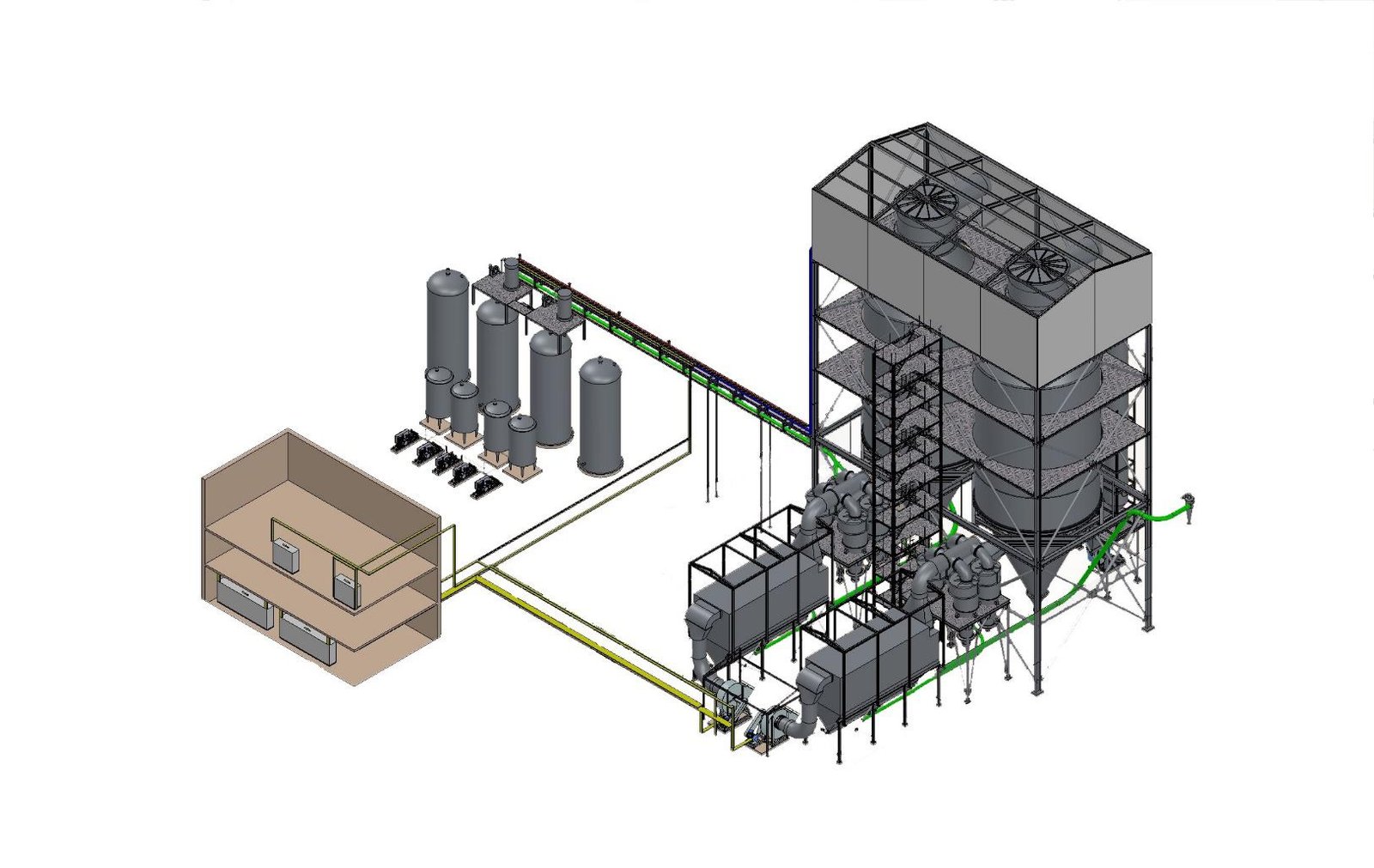
The process involves spraying the concentrated liquid to be supplied into small droplets in a chamber in which hot air is circulated.
Cooling towers are considered to be the most efficient means of cooling water for industrial facilities worldwide. With economic and environmental factors in mind, it is always important to consider the fact that the construction and operation of evaporative cooling towers requires the use of sufficiently efficient modern fillings.
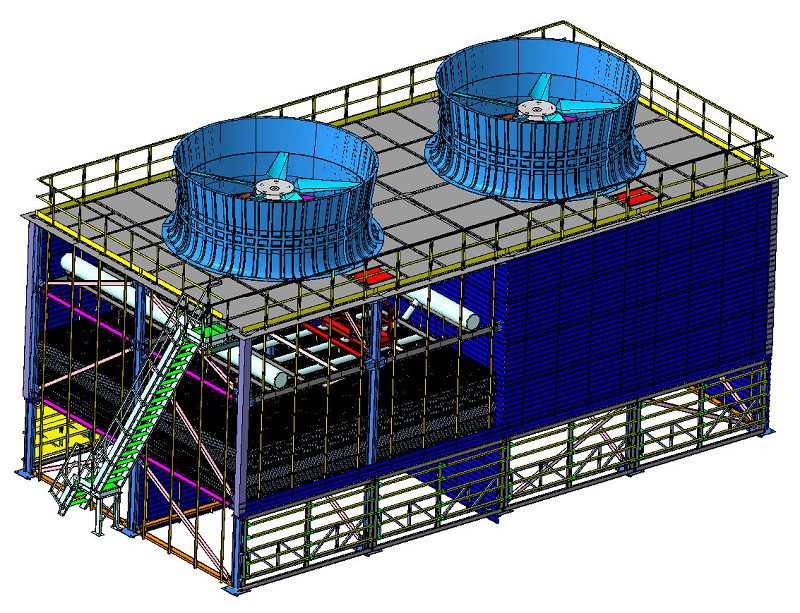
We offer a wide range of different types of cooling towers, with individual solutions for each individual Customer's project: